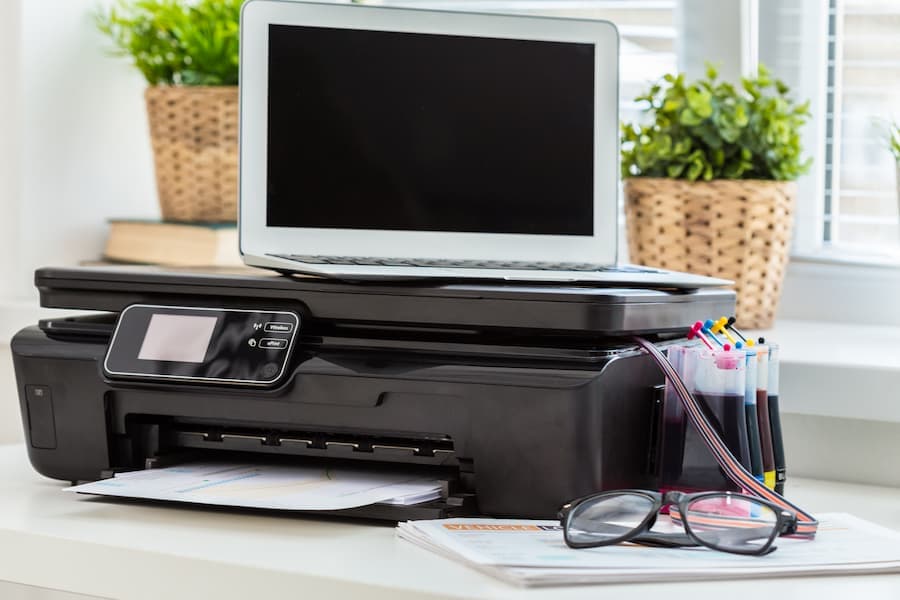
An inkjet printer is a printer that creates images by spraying tiny droplets of liquid ink onto paper through microscopic nozzles. It’s the most common type of home printer because it’s affordable, compact and excellent at color and photos. Most inkjets are all-in-ones that also scan and copy. The main alternative is a laser printer, which uses dry toner and is better suited to high-volume text printing.
How an inkjet printer works
The print head moves back and forth across the page while the paper advances. Thousands of nozzles fire droplets of cyan, magenta, yellow and black ink in precise patterns, blending them to create every color. There are two main methods:
- Thermal inkjet (used by HP and Canon): a tiny heater creates a bubble that pushes a droplet out of the nozzle.
- Piezoelectric inkjet (used by Epson): a crystal flexes when charged, squeezing ink out without heat.
Is an inkjet printer the same as a regular printer?
For most homes, yes. When people say “a regular printer”, they usually mean an inkjet, since it’s the type found in most homes. Offices more often use laser printers and multifunction copiers, which work differently.
Types of inkjet printers
| Type | How ink is supplied | Best for |
|---|---|---|
| Cartridge inkjet | Small replaceable cartridges | Light home use, low upfront cost |
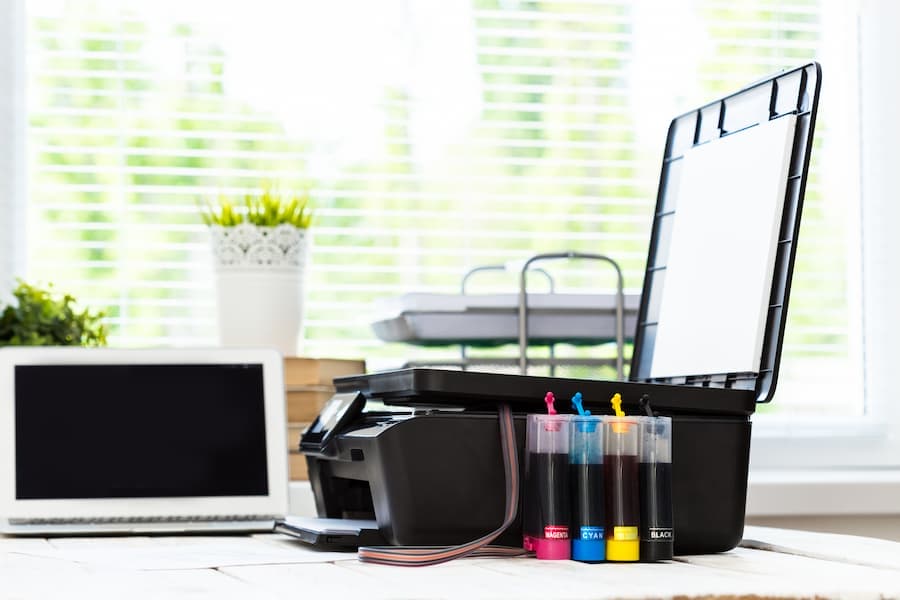
| Ink-tank (supertank) | Refillable tanks filled from bottles | Frequent color printing at low cost per page |
| Photo inkjet | Extra colors for smoother photo tones | Photographers and creative work |
| Business inkjet | High-yield cartridges or ink bags | Small offices wanting low energy use and fast color |
| Wide-format inkjet | Large cartridges or tanks | Posters, plans, banners |
Pros and cons
Advantages
- Excellent photo and color quality
- Low purchase price
- Prints on many paper types, including glossy photo paper and card stock
- Compact, quiet and energy-efficient
Disadvantages
- Cartridges can make the cost per page high
- Ink can dry out and clog nozzles if the printer isn’t used
- Slower than laser printers for long documents
- Text can smudge on plain paper before it dries
How to choose an inkjet printer
- Estimate how much you print. If you print color often, an ink-tank model saves money over time.
- Compare cost per page, not just the price of the printer.
- Check features: wireless and phone printing, automatic two-sided printing, a document feeder for scanning.
- Consider a laser printer instead if you mainly print text or print only occasionally. See laser vs. inkjet.
Tips to keep an inkjet working
- Print a page at least once a week to keep the nozzles from drying.
- Run the printer’s nozzle check and head cleaning if prints are streaky or missing colors.
- Turn the printer off with its power button so it can cap the print head.
- Use paper designed for inkjets for photos and color-heavy pages.
Frequently asked questions
What does inkjet mean?
“Inkjet” describes how the printer works: jets of tiny ink droplets sprayed onto paper.
Which type of printer is typically found in homes?
Inkjet printers, usually all-in-one models that print, scan and copy.
Are inkjet printers good for business?
Business inkjets and ink-tank models work well for small offices with moderate color printing. Higher-volume offices usually do better with laser multifunction copiers.
Do inkjet printers use toner?
No. Inkjets use liquid ink. Toner is used by laser printers. See do laser printers use ink?
Printing for your office
When your office outgrows desktop printers, a leased multifunction copier with toner and service included is usually cheaper and simpler. Titan Office Solutions serves businesses across North Carolina, South Carolina and Virginia. Get a free assessment.